
When we listen to bereaved parents, we hear again and again about relationships that continue after their baby has died. Parents may still talk to their baby, think about them, feel their presence, or include them in decisions, anniversaries, subsequent pregnancies and new chapters of life.
They might also wonder whether they should still be doing these things. And as practitioners, we may find ourselves curious too. Is this part of healthy grieving? Should we encourage it, simply acknowledge it, or be concerned if a parent seems deeply connected to their baby long after the loss?
This ongoing relationship is often described as a continuing bond. Continuing bonds theory offers a way of understanding these experiences and what they may mean for grief and bereavement care.
For those of us supporting families through pregnancy loss, stillbirth, neonatal death, and infant death, understanding continuing bonds theory can help us recognise the different ways a relationship with a baby may continue after death, and notice the assumptions we might carry about what grief should look like.
How We Came to Think about Mourning as Letting Go and What It Might Mean for Bereaved Families

For much of the twentieth century, a number of influential approaches to mourning understood adaptation to loss as involving a gradual withdrawal of emotional energy from the deceased and a reinvestment in life and relationships.
Over time, this emphasis on relinquishing the bond became influential in how mourning was understood and supported. These ideas also shaped wider cultural expectations about what “healthy” mourning should look like.
Freud’s influential 1917 essay, Mourning and Melancholia, was an important part of this history. Within this way of thinking, letting go of the bond was seen as part of adapting to life after loss and moving towards resolution or recovery.
These ideas became embedded not only in theoretical frameworks but also in conventional understandings of bereavement counselling and therapeutic practice. For some bereaved parents, this could mean that continuing to feel connected to their baby, speaking to them, holding onto objects or carrying them forward in life was experienced in silence, particularly when those around them expected them to let go.
It would take decades before continuing bonds theory gave this experience a name and a research base, reframing an ongoing connection to the deceased as a normal and potentially adaptive part of grief, rather than necessarily a failure to move on.
Also read: Anger after Pregnancy Loss: What It May Be Communicating and How We Can Respond
Understanding Continuing Bonds Theory
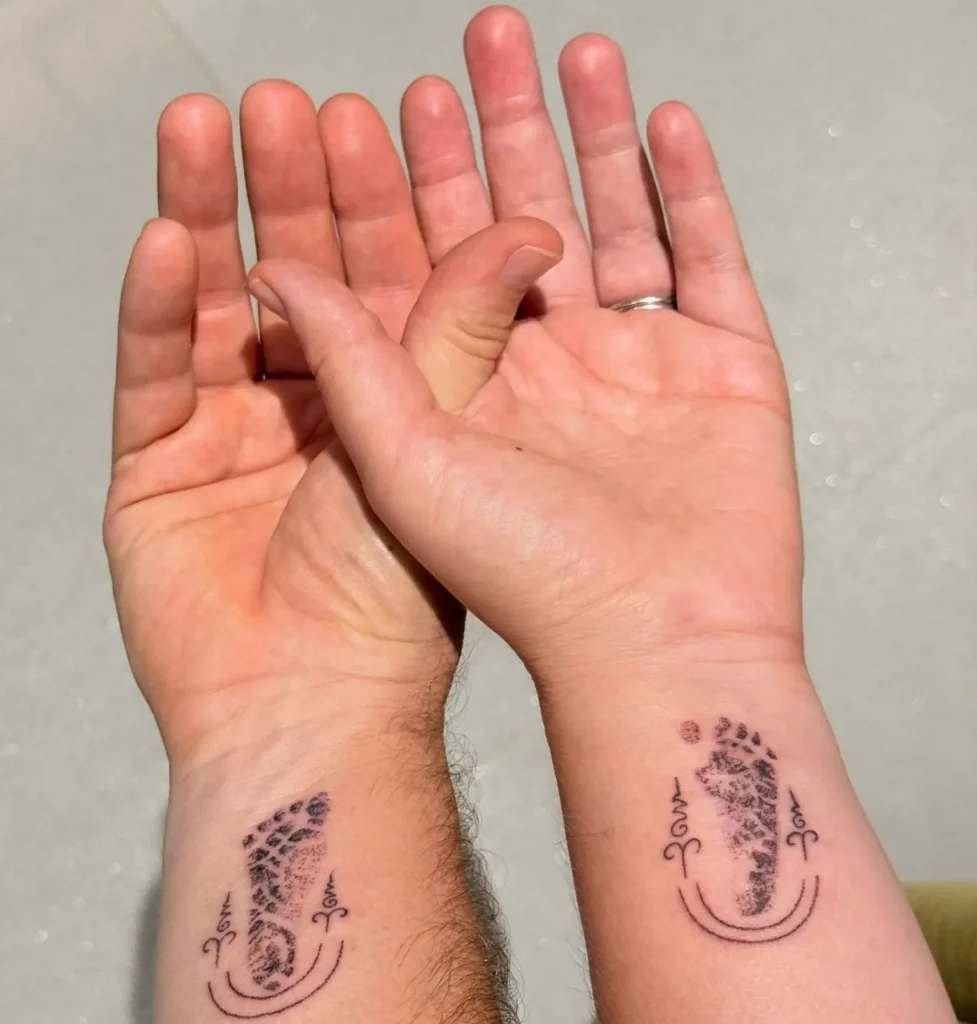
Continuing bonds theory was most closely associated with Dennis Klass, Phyllis Silverman, and Steven Nickman, whose 1996 edited volume Continuing Bonds: New Understandings of Grief brought the concept into wider discussion.
This framework challenged the assumption that adapting to loss necessarily required the bereaved person to detach emotionally from the person who had died. Instead, it drew attention to the ways people may maintain an ongoing relationship with someone who has died, through memories, rituals, symbolic objects, inner representations and other forms of connection.
Bereaved people have long maintained relationships with those who have died. What changed was how theorists and clinicians came to understand them.
A continuing bond doesn’t mean that grief remains unchanged, or that a person is unable to adapt to life after loss. The relationship may change over time, and the ways someone experiences or expresses that connection may change with it.
Also read: How to Support Bereaved Parents Who Blame Themselves after Pregnancy Loss
What Continuing Bonds Can Look Like for Bereaved Parents

Continuing bonds can look very different from one family to another. For some parents, the connection may be expressed through talking about their baby, keeping photographs or other objects, marking anniversaries, visiting a place that holds meaning, or including their baby in family rituals and important decisions.
For others, the bond may be experienced more privately through memories, a feeling of their baby’s presence, or an ongoing awareness that their baby remains part of their lives.
Research into continuing bonds following stillbirth has found that many parents experience their ongoing relationship with their baby as supportive of their coping. Parents also valued being able to share their relationship with their baby with compassionate others. However, some reported that family and friends didn’t understand or support that relationship. And for others, a continued relationship was painful or accompanied by a wish to distance themselves from the bond.
There is no single way a continuing bond should look, and not every parent will choose to maintain this bond in the same way, if at all. These relationships, and the choices parents make around them, are deeply personal, unique and nuanced. What matters for practitioners is understanding that continuing bonds are part of how some families choose to mourn and maintain their relationship with their baby, and, importantly, being supportive of the ways they choose to do this, or not.
Also read: How We Can Strengthen Support for Families Experiencing Pregnancy Loss
What We Bring to the Work

Our own experiences and understanding of grief and mourning inevitably come with us into our work. We may have assumptions about what mourning should look like, sometimes without even realising it.
This can show up in small ways: a look of concern when a parent says they still talk to their baby. A slight redirection when a family wants to name their baby in every conversation. A well-intentioned suggestion that it might be time to put some things away.
These responses are unlikely to come from a lack of care. Instead, they may reflect our own uncertainty, discomfort, or ideas about what grief and mourning are supposed to look like.
Becoming curious about what we bring into these encounters, and how it might shape the way we respond, is part of grief-informed practice.
Also read: Compassion Fatigue in Reproductive & Perinatal Loss: Recognising the Signs, Finding Support
Supporting Continuing Bonds in Practice

Ask about the relationship, not just the grief
Rather than focusing only on how a parent is coping with their loss, we can ask about the baby directly. What was their name? What would you like me to know about them? This acknowledges the relationship, not only the absence.
Support memory-making as part of care
Memory-making can be an important part of care. Photographs, keepsakes, naming, rituals and other meaningful ways of remembering a baby can help parents acknowledge their baby’s place in their family story. We can invite rather than prescribe, asking what feels meaningful for this particular family.
Witness the bond rather than manage it
Our role is not to direct what a continuing bond should look like, but to recognise it and remain supportive of the ways a family chooses to express and maintain their relationship with their baby.
Understand that the bond changes, but does not need to end
A continuing bond may change over time as a family adapts to life after loss. The ways a parent experiences or expresses their relationships with their baby may shift, but the relationship itself does not have to disappear. Supporting families to find their own way of maintaining that connection, as it changes over time, is part of grief-informed care.
Also read: When Loss Has No Name: Understanding Ambiguous Loss
Continuing Professional Development
Understanding continuing bonds theory is one part of what it means to offer genuinely grief-informed care to families experiencing pregnancy loss. Knowing the framework is a starting point. Knowing how to hold it in the room, in real conversations with bereaved families, is something else entirely.
Notes for the Journey is a monthly professional development resource for practitioners whose work brings them into contact with pregnancy loss, stillbirth, neonatal death, and other forms of reproductive loss. Each edition includes a reflection, a research insight, a practical takeaway, and a question to carry into your work.
If you’d like to continue exploring practitioner sustainability, reflective practice, and bereavement care alongside us, you can subscribe to Notes for the Journey here.
People Also Ask
Is it normal for parents to talk to a baby who has died?
Yes. Talking to a baby who has died can be one way a bereaved parent maintains an ongoing relationship with their baby. Continuing bonds theory recognises that relationships with someone who has died can continue in different forms, including through talking, memories, rituals, objects and an ongoing sense of connection.
For practitioners, the important point is not to assume that this behaviour needs to be discouraged or interpreted as an inability to grieve. It may simply be part of how that parent chooses to mourn and maintain their relationship with their baby.
What is the continuing bonds theory?
Continuing bonds theory proposes that maintaining an ongoing inner relationship with someone who has died can be a normal and potentially adaptive part of grief. Rather than assuming that mourning requires emotional detachment from the deceased, the theory recognises that relationships can change form and continue over time.
The framework was brought into wider discussion by Dennis Klass, Phyllis Silverman and Steven Nickman in their 1996 edited volume Continuing Bonds: New Understandings of Grief.
Is continuing bonds theory supported by research?
Research has explored continuing bonds in a range of bereavement contexts, including following stillbirth and pregnancy loss. Studies suggest that the nature of the continuing relationship and the social context in which it is experienced can be important to bereavement adaptation.
Research following stillbirth has also found that parents may value sharing their relationship with their baby with compassionate others, while some experience a lack of understanding or support from family and friends.
How can practitioners support continuing bonds after pregnancy loss?
Practitioners can support continuing bonds by recognising that families may maintain their relationship with their baby in different ways. This might include talking about the baby, using their name, keeping photographs or other meaningful objects, marking anniversaries, or developing rituals and other forms of remembrance.
The role of the practitioner is not to direct what a continuing bond should look like, but to understand it and support the ways each family chooses to mourn and maintain their relationship with their baby.
How does continuing bonds theory apply to pregnancy loss?
Continuing bonds theory can be particularly relevant following pregnancy loss because parents may have had very little time with their baby, while the relationship and significance of that baby within the family can continue long after the loss.
Supporting parents to maintain that relationship in ways that are meaningful to them can be part of grief-informed perinatal bereavement care. For practitioners, understanding continuing bonds can help us recognise these connections rather than inadvertently communicating that parents need to let go.
References
Brintow, M., et. al. (2024). Continuing bonds in parents after a loss in pregnancy, or a death at or shortly after birth: A population-based study. Death Stud, 48(9), 975 – 987. https://doi.org/10.1080/07481187.2023.2297059
Hunt, C., & Josselin, D. (2024). “What’s inside of you now is just bones and skin”. The tension between restorative meaning-making and deliberate detachment in maternal experiences of stillbirth. OMEGA—Journal of Death and Dying, 90(2), 848 – 864. https://doi.org/10.1177/00302228221112255
Jones, E., et. al. (2023). Continuing bonds following stillbirth: Protective and risk factors associated with parental bereavement adaptation. Journal of Reproductive and Infant Psychology, 41(1), 93 – 109. https://doi.org/10.1080/02646838.2021.1972951
Klass, D., Silverman, P., and Nickman, S. (1996). Continuing bonds: New understandings of grief. Taylor & Francis.
Testoni, I., et. al. (2020). Social support in perinatal grief and mothers’ continuing bonds: A qualitative study with Italian mourners. Affilia: Journal of Women and Social Work, 35(4), 485 – 502. https://doi.org/10.1177/0886109920906784
